
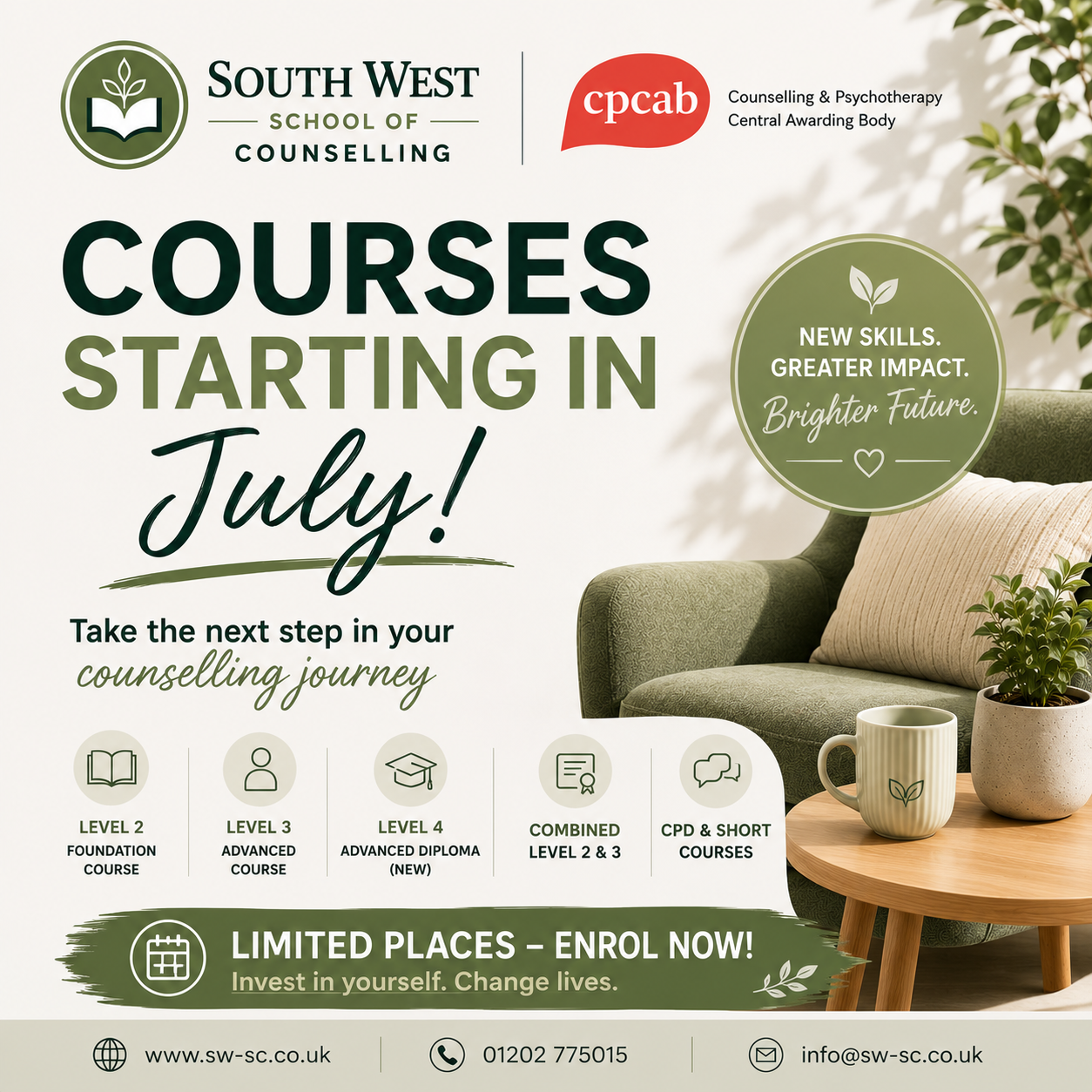
How to Become a Counsellor in the UK: A Step-by-Step Guide
If you’re thinking about becoming a counsellor, you’re not alone. More people than ever are exploring counselling as a meaningful and rewarding career, whether they’re starting fresh, changing careers, or building on experience in education, healthcare, or support work.
But one question comes up time and time again:
How do you actually become a counsellor in the UK?
The journey can feel confusing at first, with different qualifications, training providers, and professional bodies to consider. The good news? Once you understand the pathway, it becomes much clearer.
At South West School of Counselling, we support learners from their very first step through to professional practice.
Step 1: Start With Counselling Skills Training
Most people begin with an introductory qualification, such as a Level 2 Certificate in Counselling Skills.
This stage helps you build a strong foundation in:
- Active listening
- Empathy
- Self-awareness
- Boundaries
- Communication skills
This is often where people discover whether counselling is truly the right path for them.
For many learners, Level 2 is transformative - it develops skills that are valuable both professionally and personally.
Step 2: Progress to Level 3
Once you’ve completed Level 2, the next step is usually Level 3 Counselling Studies.
This stage takes learning deeper by exploring:
- Counselling theories
- Mental health awareness
- Ethics and professional practice
- Human development
- Different therapeutic approaches
Level 3 bridges the gap between basic counselling skills and professional training.
It’s where counselling begins to move from interest to career pathway.
Step 3: Complete a Level 4 Diploma
This is the key stage that qualifies you to practise as a counsellor.
In the UK, the minimum recognised professional qualification is typically a Level 4 Diploma in Therapeutic Counselling. Counselling and Psychotherapy Central Awarding Body (CPCAB) Level 4 is one of the most recognised routes.
At this level, training becomes much more intensive and includes:
- Advanced counselling skills
- Working with real clients
- Supervision
- Personal development
- Placement hours in an agency setting
This is where you transition from student to trainee counsellor.
Step 4: Gain Placement Experience
Practical experience is a major part of counsellor training.
Most professional training requires supervised client work in a placement setting, often within:
- Counselling agencies
- Charities
- Schools
- Community services
- Mental health organisations
This experience helps build confidence, competence, and professional readiness. Many Level 4 courses include at least 100 supervised client hours.
Step 5: Join a Professional Body
Once qualified, many counsellors join professional membership organisations such as:
- British Association for Counselling and Psychotherapy
- National Counselling and Psychotherapy Society
- UK Council for Psychotherapy
These bodies help ensure ethical practice, professional standards, and continued development.
Professional membership can improve employability and build trust with clients.
Step 6: Continue Developing Your Career
Qualifying is just the beginning.
Many counsellors go on to specialise in areas such as:
- Trauma
- Children and young people
- Couples counselling
- Addiction
- Bereavement
- CBT or integrative approaches
Ongoing professional development is a key part of counselling practice.
Do You Need a Degree?
This is one of the most common questions.
The short answer is: No, not necessarily.
You do not need a university degree to become a counsellor in the UK. Many qualified counsellors train through recognised diploma routes such as CPCAB.
What matters most is completing recognised training that includes practical skills and supervised client work.
How Long Does It Take?
This depends on your route and study pace.
Typically:
- Level 2: 6–12 months
- Level 3: 6–12 months
- Level 4: 2 years part-time
Many people qualify in around 3–4 years, though fast-track routes can shorten this timeline.
Is Counselling Right for You?
Counselling can be incredibly rewarding, but it also requires emotional maturity, self-awareness, and a genuine commitment to helping others.
Good counsellors are often:
- Compassionate
- Curious
- Open-minded
- Reflective
- Strong listeners
You don’t need to be perfect - you just need to be willing to learn and grow.
Final Thoughts
Becoming a counsellor is about more than gaining qualifications. It’s about developing the knowledge, skills, and self-awareness needed to support others safely and effectively.
It’s a journey that takes commitment - but for many, it’s one of the most rewarding career paths they’ll ever choose.
At South West School of Counselling, we guide learners through every stage of that journey, from first steps in Level 2 to professional practice.
Your counselling career starts with one decision: taking the first step.