
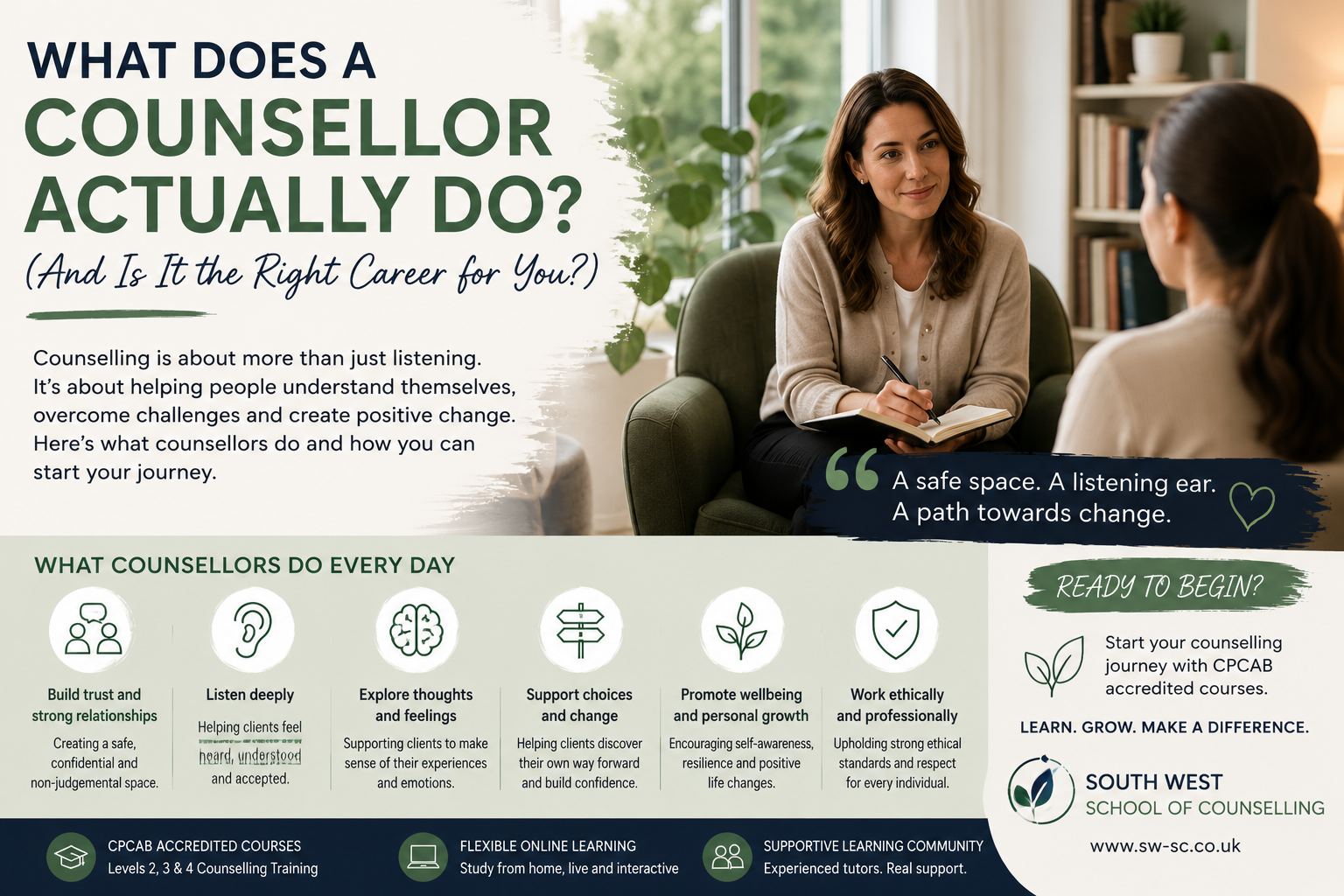
What Does a Counsellor Actually Do? (And Is It the Right Career for You?)
When people think about counselling, they often imagine someone sitting quietly in a room asking, "How does that make you feel?"
The reality is far more interesting.
Professional counsellors work with people from all walks of life, helping them explore thoughts, emotions, relationships and life experiences in a safe, confidential and non-judgemental environment.
If you've ever wondered what counsellors actually do, or whether it could be the career for you, this guide will explain.
A Counsellor Doesn't Give Advice
One of the biggest misconceptions is that counsellors tell people how to solve their problems.
They don't.
Instead, counsellors help people understand themselves, explore options and discover their own way forward.
Rather than saying, "Here's what you should do," a counsellor might ask thoughtful questions, reflect feelings and help someone make sense of what's happening in their life.
Who Do Counsellors Work With?
Every day is different.
Counsellors may support people experiencing:
- Anxiety
- Depression
- Bereavement
- Relationship difficulties
- Stress
- Trauma
- Low confidence
- Life transitions
- Family issues
- Workplace challenges
Some work privately, while others work in schools, charities, the NHS, universities, GP surgeries or businesses.
What Skills Make a Good Counsellor?
People often assume counsellors are simply "good listeners."
Listening is important, but effective counsellors also develop:
- Empathy
- Self-awareness
- Professional boundaries
- Communication skills
- Reflective practice
- Emotional resilience
- Ethical decision making
These are all skills that can be learned and developed through recognised counselling training.
Is Counselling a Good Career?
For many people, counselling offers something that other careers don't.
It provides the opportunity to:
- Make a genuine difference.
- Continue learning throughout your career.
- Work in a wide range of settings.
- Develop personally as well as professionally.
- Build meaningful relationships with clients.
Like any profession, it requires commitment, training and ongoing professional development, but many counsellors describe it as one of the most rewarding careers they could have chosen.
How Do You Become a Counsellor in the UK?
Most people begin with a recognised CPCAB Level 2 Counselling Skills qualification.
From there, learners typically progress through:
Each stage develops your knowledge, confidence and practical understanding while preparing you for the next step.
Is Counselling Right for You?
If you enjoy understanding people, value meaningful conversations and are looking for a career where you can genuinely make a difference, counselling could be worth exploring.
Many learners start with curiosity rather than certainty.
Training gives you the opportunity to discover whether counselling is the right path while developing skills that are valuable in both your personal and professional life.
Thinking About Starting?
At South West School of Counselling, we offer CPCAB counselling courses designed to support learners from their very first step through to professional training.
Whether you're exploring a career change or looking to build on existing experience, we're here to help you begin your journey.