
Why Choose the CPCAB Pathway to Counselling – And Why It Matters for Professional Recognition
If you’re considering a career in counselling, one of the most important decisions you’ll make is choosing the right training pathway. In the UK, the CPCAB route is one of the most widely recognised and respected ways to become a qualified counsellor.
But what makes this pathway so valuable, and why is it trusted by professional accrediting bodies?
What is CPCAB?
The Counselling and Psychotherapy Central Awarding Body (CPCAB) is a specialist awarding organisation dedicated entirely to counselling and psychotherapy qualifications. It is regulated by Ofqual and other UK regulators, ensuring nationally recognised standards and quality assurance. (cpcab.co.uk)
Unlike general awarding bodies, CPCAB focuses solely on counselling education, meaning its qualifications are designed by professionals within the field.
A Clear and Structured Pathway
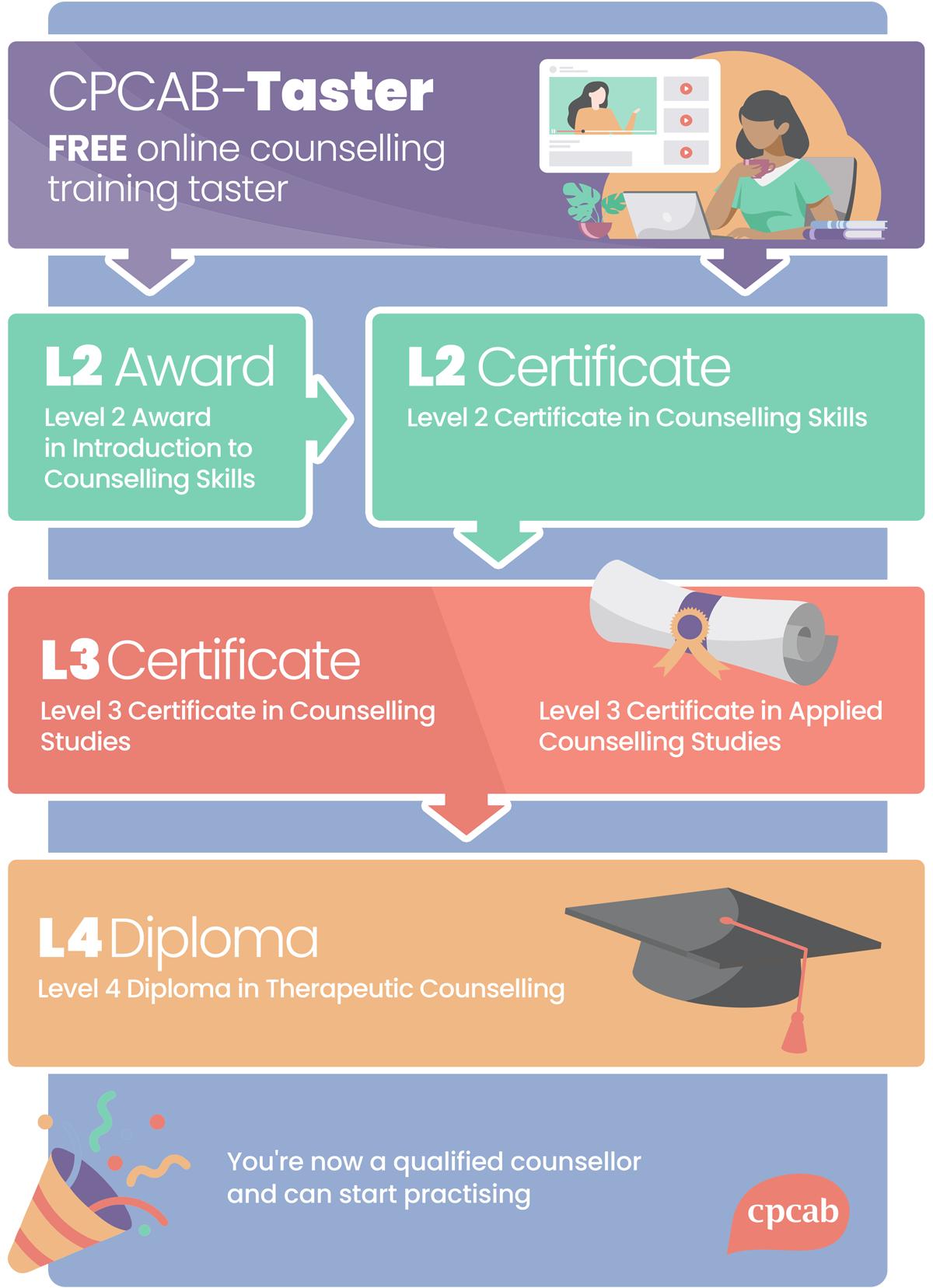
One of the key strengths of the CPCAB route is its structured progression. Students typically move through:
- Level 2 – Introduction to counselling skills
- Level 3 – Developing theoretical understanding
- Level 4 – Diploma in Therapeutic Counselling (qualifying level)
- Level 5 & beyond – Advanced and specialist training
This step-by-step approach ensures that learners build both knowledge and practical skills gradually and safely, preparing them for real client work.
Importantly, the Level 4 Diploma is widely recognised as the minimum qualification needed to practise as a counsellor in an agency setting. (cpcab.co.uk)
Recognition by Professional Bodies
A major reason students choose the CPCAB pathway is its recognition by leading professional organisations such as:
- British Association for Counselling and Psychotherapy (BACP)
- National Counselling and Psychotherapy Society (NCPS)
CPCAB qualifications meet the training standards required by these bodies, meaning graduates can apply for membership and work towards accreditation.
This is a crucial step in becoming a credible, employable, and ethically accountable counsellor.
Why Accreditation Matters
Counselling in the UK is not legally regulated in the same way as some professions, which means technically anyone can call themselves a counsellor. (cpcab.co.uk)
However, professional bodies like BACP set clear standards for safe and ethical practice. Being on an accredited register shows that a counsellor has:
- Completed recognised training
- Met professional standards
- Committed to ongoing development
- Agreed to ethical frameworks
In practice, this recognition is often essential for working in organisations such as the NHS, charities, and schools.
A Balance of Theory, Skills, and Personal Development
CPCAB training is not just academic—it’s experiential. Courses are designed to include:
- Practical counselling skills
- Supervised client work
- Personal development and self-reflection
- Ethical and professional awareness
This balance ensures that students are not only knowledgeable, but also safe, self-aware, and effective practitioners.
A Qualification Designed by the Profession
One of CPCAB’s unique strengths is that it is “run by counsellors for counsellors.” (cpcab.co.uk)
This means the training remains relevant to real-world practice, reflecting what is actually needed in counselling settings today, not just theoretical knowledge.
Why It’s a Trusted Route
Choosing a CPCAB pathway means choosing:
- A nationally regulated qualification
- A clear route into professional membership
- Training aligned with industry standards
- A strong foundation for long-term career development
It provides both credibility and confidence, two things that are essential when starting out in counselling.
Final Thoughts
Becoming a counsellor is about more than gaining a qualification, it’s about developing the skills, awareness, and professionalism needed to support others safely and effectively.
The CPCAB pathway offers a structured, recognised, and respected route into the profession, one that is trusted by accrediting bodies and valued across the UK.
At South West School of Counselling, we guide students through this journey with the support, training, and reflective space needed to grow into confident, ethical practitioners.
If you’re considering counselling training, choosing the right pathway could be the first step towards a meaningful and recognised career.